


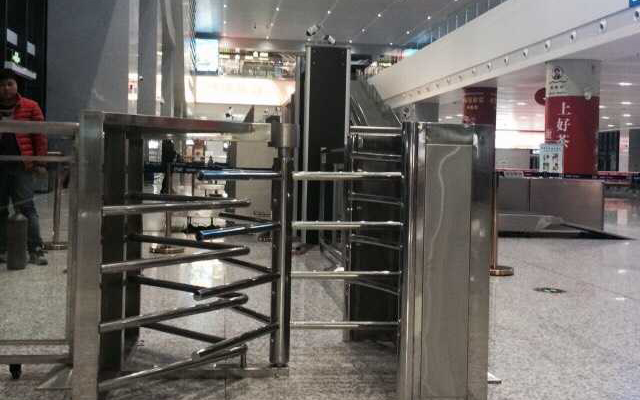
There’s a specific moment of friction at any high-speed rail station. It’s not the ticketing or the boarding—it’s the exit. People are rushing, bags are heavy, and everyone just wants to get out. But you need a physical barrier to prevent people from coming back in through the exit. That’s where the waist high turnstile comes in. It’s a solution that doesn’t get much attention, but it’s absolutely critical for maintaining order in these environments.
At a major transit hub, the one-way exit lane needs to be efficient but also absolutely secure. It prevents fare evasion and, in the event of an emergency, keeps the flow of people moving in the right direction. The Waist High Turnstile is the perfect piece of security equipment here because it allows for high throughput while maintaining a strong visual presence. People see the barrier, and they understand instantly that they need a valid ticket or token to pass, even if they’re just going out. The mechanism is simple. It’s durable, often built from 304 stainless steel to withstand the constant bumping of luggage and the wear and tear of thousands of daily commuters. Unlike the full height turnstile, the waist-high version feels less oppressive, which is key in a public space that’s already stressful. It creates a psychological checkpoint without making people feel like they’re in a prison. It’s a perfect example of how a simple piece of access control equipment can solve a major logistic headache for the station operators, ensuring only authorized personnel or those exiting are using that specific lane.
But let’s dig a little deeper into what actually happens on the ground. The high-speed rail network in China moves hundreds of millions of people every year. That’s an immense pressure on every piece of infrastructure, and the one-way exit is a particular pain point because passengers are tired, they’re distracted, and they’re often not paying close attention to signs. The Waist High Turnstile used in these lanes has to be incredibly responsive. We’re talking about opening times measured in milliseconds, because a delay of even half a second at peak hour creates a ripple effect that can back up the entire concourse. That’s why the interior mechanism relies on a combination of a reliable motor drive and a fail-safe clutch system. If the power goes out, the barrier automatically releases so nobody gets trapped. But in normal operation, it’s fast, precise, and unforgiving to anyone trying to sneak through without a validated ticket. And here’s something most travelers don’t notice: the surface of these turnstiles is treated with an anti-fingerprint coating. It sounds trivial, but think about it—thousands of sweaty palms touching the same spot every day. Without that, the equipment would look grimy within hours. That’s the kind of thinking that separates a good turnout from a poorly planned installation. For the station managers, the waist-high turnstile isn’t just a gate; it’s a traffic control tool that helps them predict flow and allocate staff more intelligently.